
Telling stories in Spanish is part of many Latin American countries’ culture. We grow up listening to stories that were passed from one generation to the other, most of them based on superstitions and others on real-life experiences. In this lesson, we will use the rules of the past tense in Spanish plus some new phrases for storytelling in Spanish. You will have the chance to practice with two listening activities and quizzes. Let’s start…
How to tell stories in Spanish: the preterite tense vs the imperfect past tense
As you probably know, there are two different structures for the past tense in Spanish, the simple past and the imperfect past tense. On the one hand, the simple past comes really handy when talking about historical events or things people did in the past at a given time, for example:
- “Thomas Edison fue inventor estadounidense” (Thomas Edison was an American inventor)
- “La Segunda Guerra Mundial terminó en 1945”. (“World War II ended in 1945.”)
On the other hand, the imperfect past tense will be more useful for telling stories in Spanish because stories often talk about actions in progress in the past or things that people used to do regularly, for instance:
- “El niño comía una manzana cada mañana” (The child would eat an apple every morning).
Keep in mind that you could use the simple past for telling stories in Spanish too and vice versa, depending on what you want to tell.
Making sentences with the imperfect past tense in Spanish
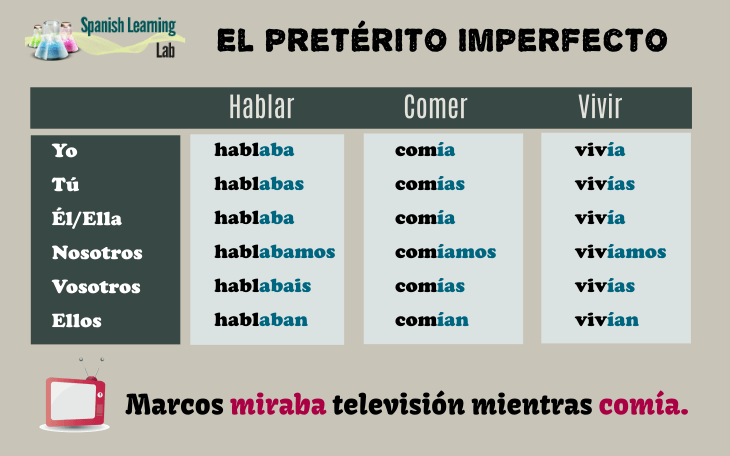
Since we will be using the imperfect past tense in Spanish, here is a picture from our grammar lesson about this topic showing how to conjugate these verbs in this tense.
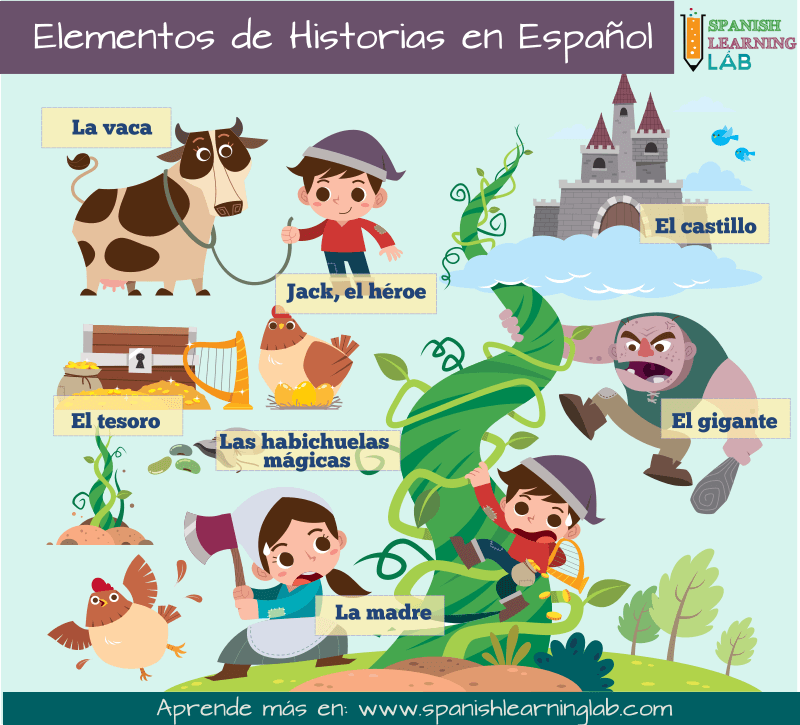
Please read and listen to the examples below. Most of them correspond to things that characters like “Gigantes” (giants), “Princesas” (princesses) and others would do in stories in Spanish.
|
AMAR y DISFRUTAR – El gigante amaba la montaña y disfrutaba del paisaje cada mañana.
LOVE and ENJOY – The giant loved the mountain and enjoyed the scenery every morning.
|
|
TRABAJAR – Cenicienta trabajaba todo el día sin descanso.
WORK – Cinderella worked all day without rest.
|
|
PASAR TIEMPO – La niña pasaba el tiempo jugando con sus amiguitos.
SPEND TIME – The girl spent her time playing with her little friends.
|
|
ESTAR y SABER – El leñador estaba confundido. No sabía qué hacer.
BE and KNOW – The woodcutter was confused. Not know what to do.
|
|
HACER y COMER – La reina hacía los pasteles más deliciosos. El príncipe se comía todos los pasteles.
MAKE and EAT – The queen made the most delicious cakes. The prince ate all the cakes.
|
|
PARECER – El lobo se parecía mucho a su abuela.
To look like – The wolf looked a lot like her grandmother.
|
|
VIVIR – La bruja vivía en una cabaña en lo profundo del bosque.
LIVE – The witch lived in a cabin in the depths of the forest.
|
|
SER – Blanca Nieves era la más hermosa de todas.
BE – Snow White was the most beautiful of them all.
|
|
IR y APRENDER– Ellos iban a la escuela de magia. Ahí, aprendían sobre pociones y encantamientos.
GO and LEARN – They went to the school of magic. There, they learned about potions and enchantments.
|
|
VER y PENSAR – Cuando la princesa veía el atardecer desde la torre, pensaba en escapar.
SEE AND THINK – When the princess would watch the sunset from the tower, she would think of escaping.
|
Some examples of short stories in Spanish: audio examples + script
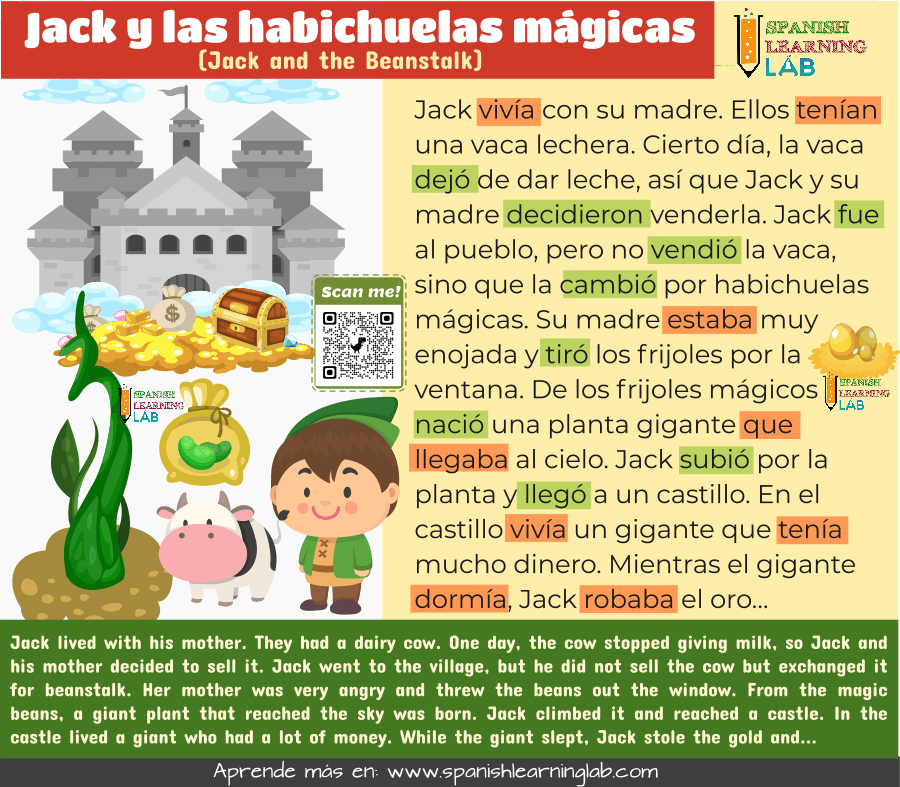
Next, you will read and listen to some examples of short stories in Spanish with their script in Spanish. The first story is about “Jack and the beanstalk”, which is often translated as either “Jack y los frijoles mágicos” or “Jack y las habichuelas mágicas”. In this story, the simple past will be used for things that the characters did at a given moment, e.g. “Él fue al pueblo” (he went to town); the imperfect tense will be used for habitual actions, actions with some duration in the past and states, e.g. “Su madre estaba enojada” (His mom was angry).
Example No. 1: Jack y las habichuelas mágicas
Important: Verbs in the preterite tense are highlighted in green and verbs in the imperfect tense are highlighted in orange.
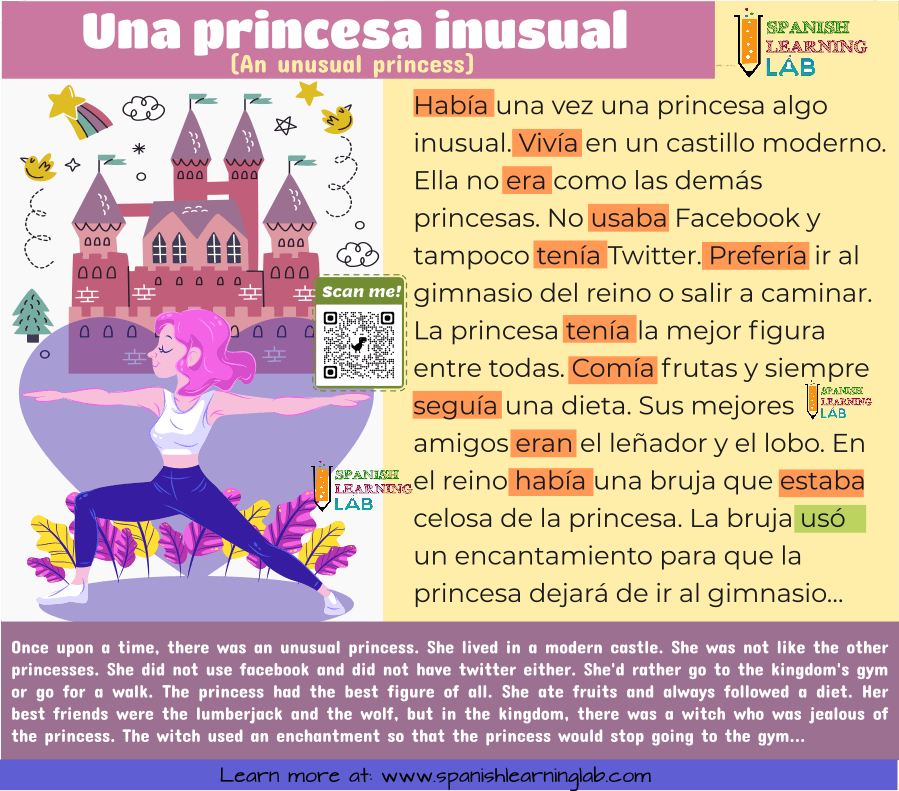
Example No. 2: Una princesa inusual
In the second short story in Spanish, we have included verbs in the imperfect tense such as “Vivía”, “Era”, “Usaba” and others. This story is made out of simple sentences with this imperfect tense, which means that if you are able to make basic sentences in Spanish and know how to use the past tense, then you would be able to tell short stories in Spanish with ease.
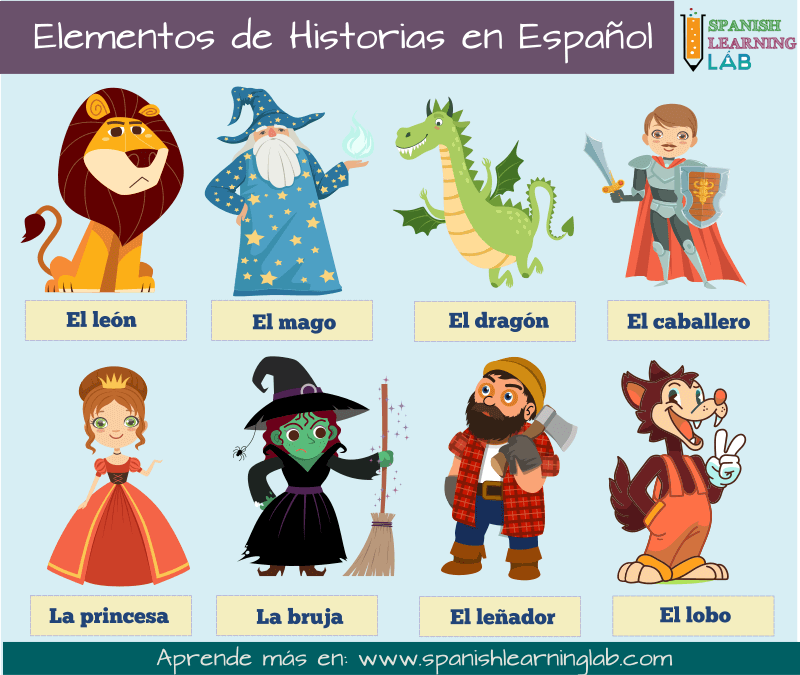
Important: Verbs in the preterite tense are highlighted in green and verbs in the imperfect tense are highlighted in orange.
Listening Activity No. 1: A short story in Spanish
Listening Activity No. 2: Telling stories in Spanish – La Mocuana
Key expressions in the story:
- “Hace mucho tiempo” means “A long time ago”
- “El escondite de las riquezas” means “The treasure’s hiding place”
- “Un espanto/ Un fantasma” means “A ghost”
- “Los españoles” refers to “The Spanish conquistadors”