
Hello and welcome to a new lesson. In the previous lesson, we introduced a list of questions and expressions that are very useful when talking about the weather in Spanish, and we explained how to use the verbs ESTAR, SER, and HABER with this vocabulary. In this lesson, you will find several weather descriptions and forecasts in Spanish, and you can practice with the exercises in various interactive quizzes. Let’s begin…
Reviewing weather vocabulary in Spanish
Below are some photographs of common weather conditions and natural disasters in Spanish. Look at each image, read the list, and write the name of each weather event below the interactive flashcards to test your knowledge of this vocabulary.
Interactive exercise No. 1
Hace frío / Parcialmente nublado / Terremoto / Truenos / Inundación / Hace calor / Arcoíris / Soleado / Nieve / Nublado / Erupción Volcánica / Sequía / Ventoso / Tornado / Lluvioso.
ESTAR + weather conditions in Spanish
As we mentioned in the previous lesson, you can use several types of verbs and expressions for describing the weather in Spanish at given moment, some of which will be reviewed so that the descriptions provided make sense to you. First, we use both “El clima” and “El tiempo” to refer to the weather. The verb ESTAR is probably the easiest to talk about weather conditions as all we just need to say “El clima está + a weather condition or adjective in Spanish”, being these weather conditions words such as “soleado, nublado, frío, caliente, lluvioso” and so on.
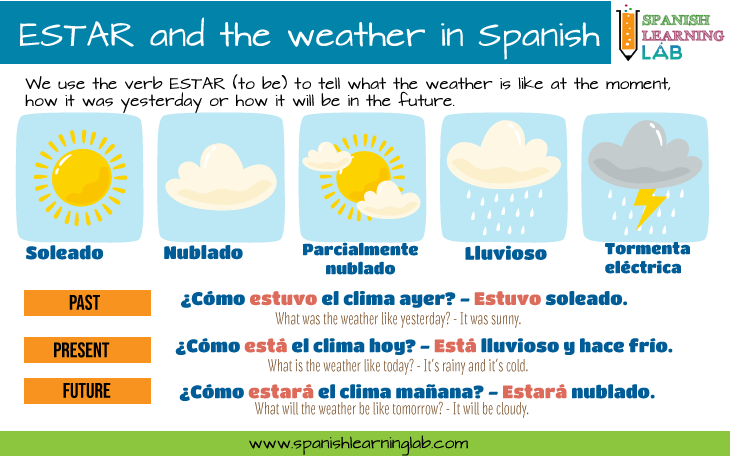
Instead of “El clima” it is possible to use the expression “El día…” or even a season such as “El verano”. Pay attention to the example in the following picture:
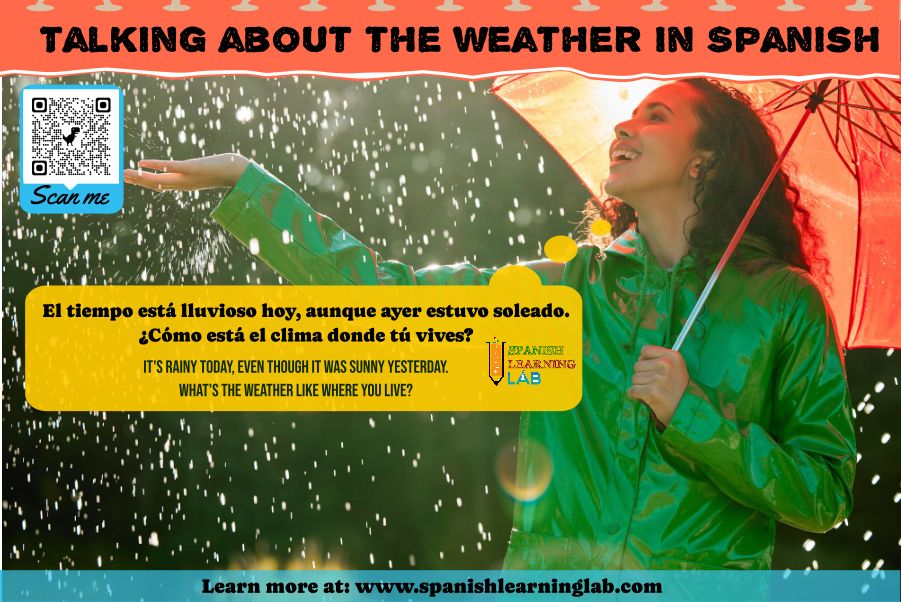
Tenses are really important too, especially when it comes to describing the weather in Spanish in the past tense or present tense,not to mentionthe future tense for a Spanish weather forecast. Check the first example and try to analyze how ESTAR is used for weather descriptions.
Describing the weather in Spanish using ESTAR – Decribiendo el clima
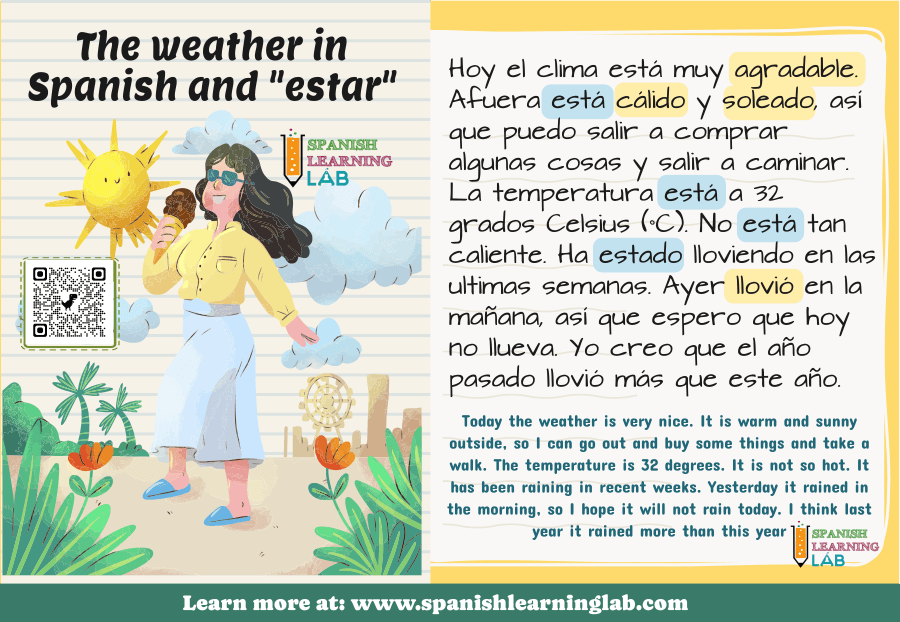
Read the following text with a short description of the weather in Spanish using the verb “estar”.
SER + weather conditions in Spanish
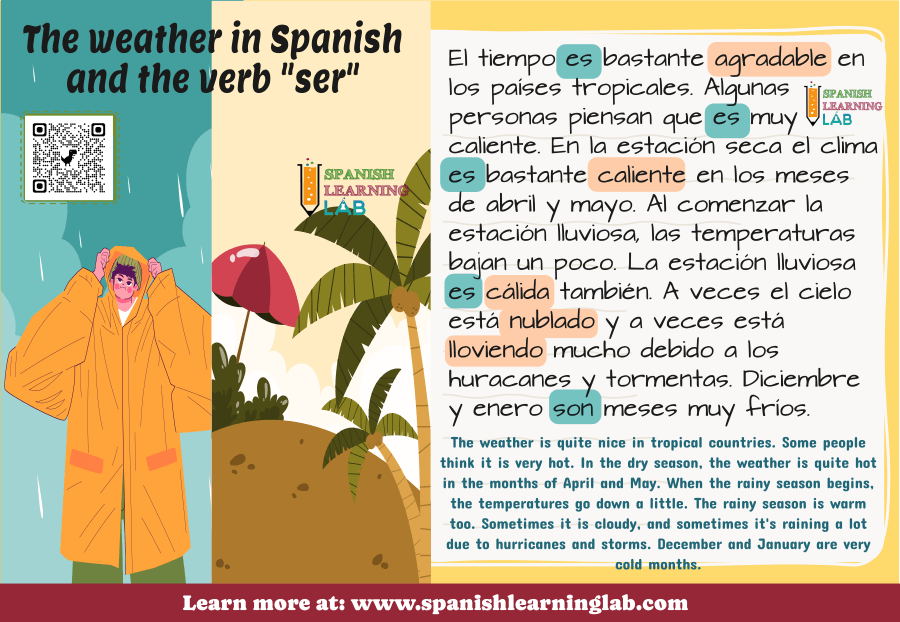
Basically, ESTAR will be used to describe weather conditions that will change regularly, as this verb is normally used to represent states. However, we will use the verb SER to talk about the normal weather in a town or any other place in a given season or time of the year, just as shown in the following examples:
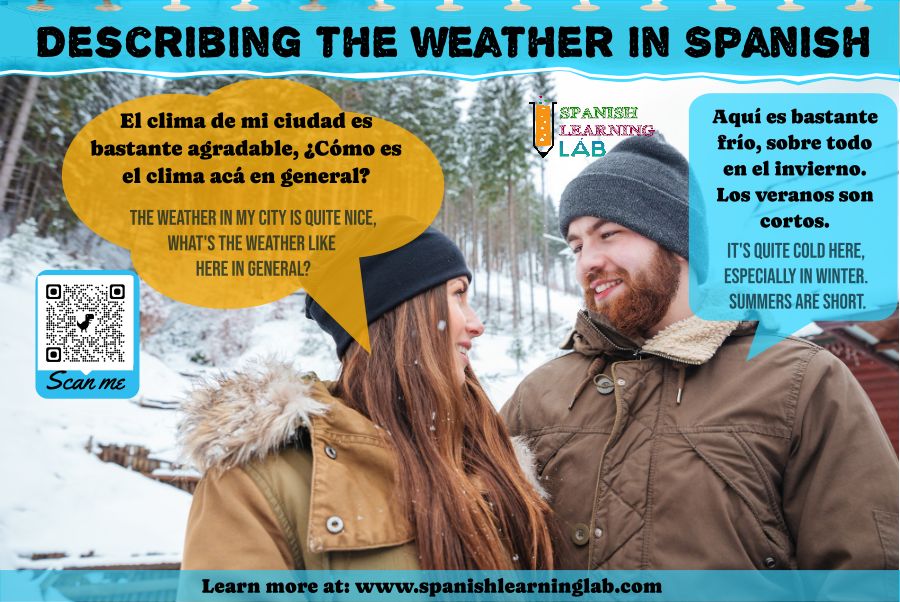
- El clima es agradable en esta ciudad. (The weather is nice in this city.)
- El clima es muy frío en el invierno en Canadá. (The weather is very cold in winter in Canada.)
It is also possible to explain why a specific weather event or condition is happening using “debido a”, “por” and “porque” as in:
- El clima es muy agradable la mayoría del tiempo, pero hoy está lloviendo mucho debido al huracán. (The weather is very pleasant most of the time, but today it is raining a lot because of the hurricane.)
This last long sentence explains that the weather is nice most of the time, but it has been raining a lot (using ESTAR not SER) due to a huge storm (una tormenta gigante). Let’s see how both ESTAR and SER are used for describing the weather in Spanish.
Describing the weather in Spanish with SER and ESTAR – Decribiendo el clima
Interactive exercise No. 2
Read this description of the weather in Spanish and fill in the blanks with the correct conjugations of the verbs SER and ESTAR.
Writing a weather forecast in Spanish – El pronóstico del clima
In order to make a Spanish weather forecast we must use the future tense. For forecasting, you will need verbs such as “caer” (to fall), “llover” (rain), “continuar” (continue), “ir” (to go), “subir” (go up) and “bajar”(go down), “mover” (to move). The easiest way to transform these verbs in the future tense is by adding either “-A” or “-AN” at the end of the verb, for example:
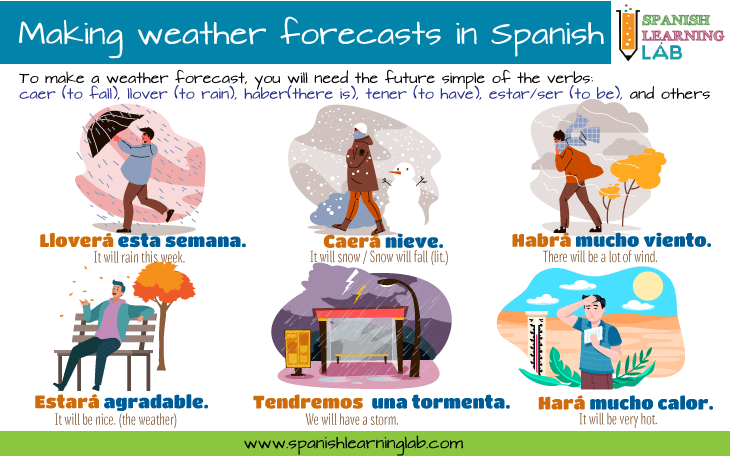
Present: En este pueblo llueve todos los días (It rains every day in this town)
Future: Lloverá todos los días. (It will rain every day)
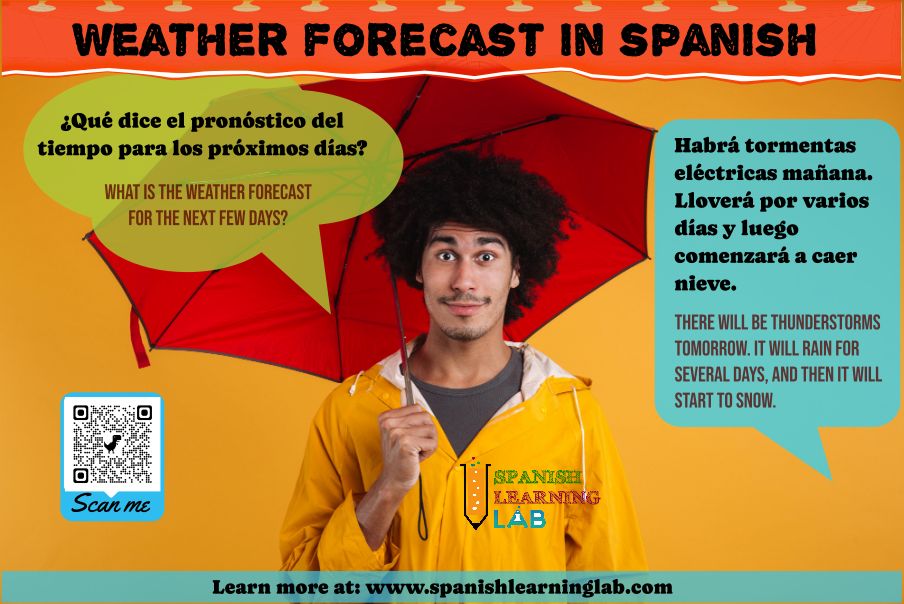
Weather forecasts in Spanish often include words like “temperatura”, “lluvia”, “nieve”, “precipitaciones” and many others. Take a look at this simple example:
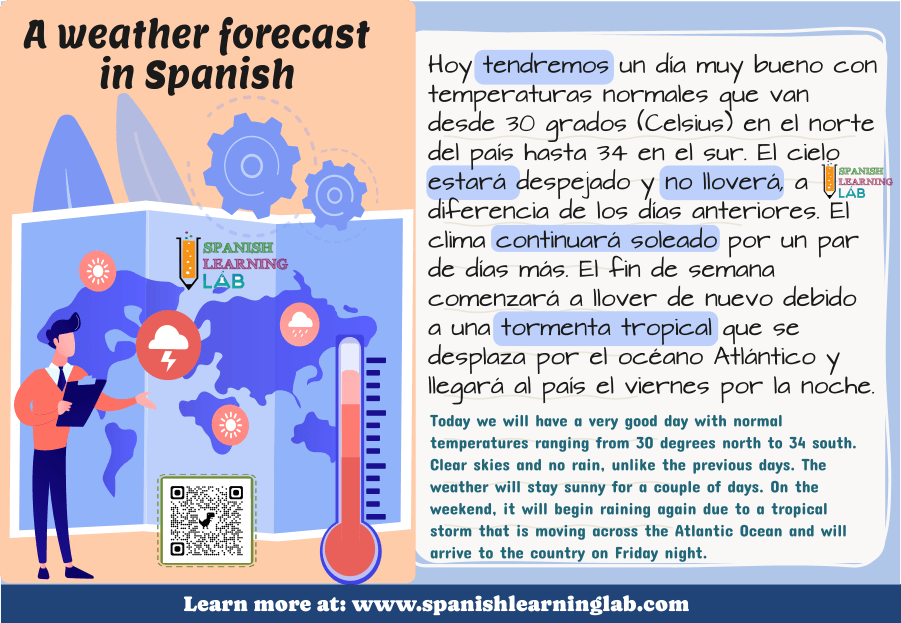
Most of the time you will hear a combination of different tenses in order to compare the temperatures from previous days with new ones or to compare other weather conditions. Make sure to add tilde to the last vowel of the verbs in the future when they finish in vowels, e.g. “caerá” when you are writing a description or a weather forecast script. Let’s see all this in an example.
A Script for a Weather Forecast in Spanish – El pronóstico del tiempo
Read and listen to the following short passage about a weather forecast in Spanish using the simple future tense.
Interactive exercise No. 3
Read this weather forecast in Spanish and fill in the blanks with the simple future tense of the verbs in parentheses. Then, check your answers.
Listening Activity No. 1: Talking about the weather in Spanish
Key expressions in the conversation:
- “Por fin“, means “At last”
- “Eso fue lo que escuché…“, means “That’s what I heard”
Listening Activity No. 2: The weather forecast in Spanish
Homework:
Do some research about the weather in your town and write a script for Spanish weather forecast using your own information. Make sure to check the examples in this lesson and use other verbs if necessary. ¡Hasta pronto!
Related Spanish Worksheets:
- The Vocabulary for the Weather in Spanish
- Expresiones sobre el Clima en Español – Ejercicios en PDF
- Describing the Weather in Spanish
- Weather conversation cards in Spanish
- Months of the Year and the Weather in Spanish (Dialogues)
- My Favorite Season in Spanish (Reading)
- Countries with Tropical Weather (Reading)
i want a weather report on a
states in america
REEEEEEEEEE